Comedians by Stephen Zelnick

Re-reading Old Novels: Conrad and Greene and the Collapse of the West
Flames tear through the roof of Limoges City Hall, France, on the night of 17 October 2026. Fire crews direct water at the blaze as smoke billows above the building and blue emergency lights illuminate the fountain below. Ministère de la Culture
Europe is collapsing, its central cities raging with street protests. Militarized police battle mobs of young people, joined by workers and the traditional left. Power lies with the EU in Brussels, the new capital of Europe. Brussels imposes austerity on national budgets, limiting healthcare, housing, and education to support the war in Ukraine. European industry is uncompetitive, capital investment sinks, and the job prospects for the next generation are dismal. The US also faces radical decline, bankrupted economically and morally by war, living on lies, borrowed money, and Orwellian terror.
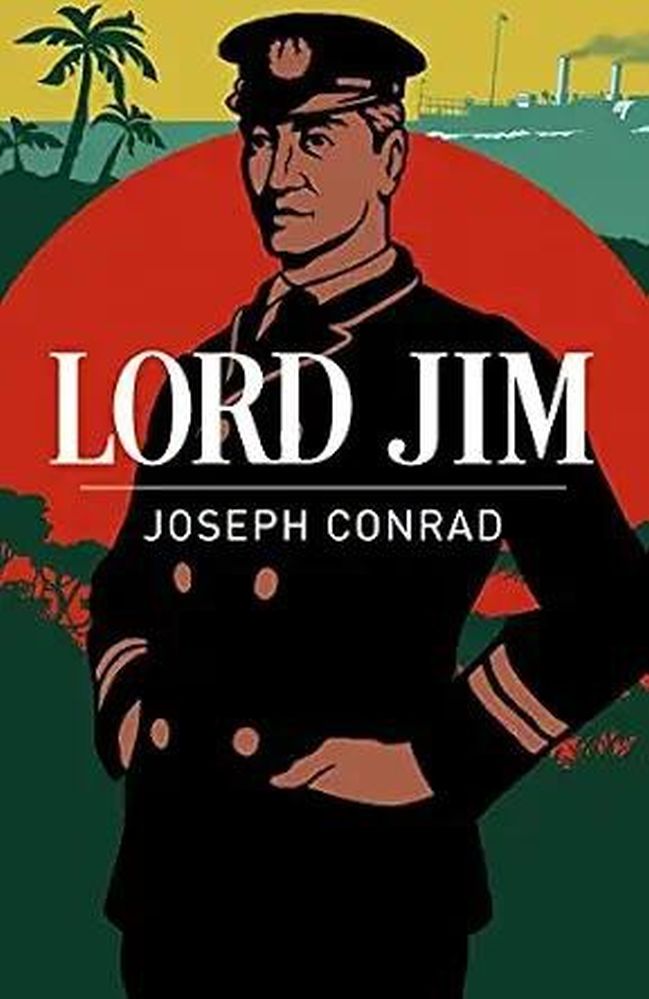
I find it interesting to re-read Joseph Conrad and Graham Greene from the present perspective -- Conrad’s Lord Jim (1900), Greene’s The Comedians (1965). Over the years, novels change, even while sitting there quietly on the shelf.
I
Graham Greene (1904 – 1991) published 25 novels, both serious and “entertainments”, spy thrillers and such. In both tracks his craftsmanship shines. He was not an experimental novelist, not Virginia Woolf, and not a dazzling stylist, not Evelyn Waugh or an atmospheric wizard like Conrad. Greene’s prose is clean and serviceable and studded with wit. His novels are rich with events --love sours, thugs beat nice people, lovers betray, characters get shot, bombs explode, and many lies are exposed.
Four of his most successful novels – Brighton Rock (1938); The Power and the Glory (1940); The Heart of the Matter (1948); and The End of the Affair (1951) -- involve Catholic issues. His later novels – The Comedians among them – also engage moral issues and the Church as an institution, holding things together.
In his middle period, Greene goes out into the world, to “Greeneland”, where he tracks the post-war diseases. The Quiet American (1955) is set in Vietnam, Our Man in Havana (1958) in Cuba, A Burnt-Out Case (1960) in Congo, and The Comedians (1965) in Haiti.
These post-colonial novels may appear purely political, but Greene never relinquished the challenge of faith. How does one maintain faith in God or the verities in Papa Doc’s Haiti or the CIA’s Vietnam or the grim leper colony in Congo, and how does faith survive infidelities and broken friendships in the post-war wild ride of insincerity and living without a script.
Greene admired Conrad. They both engaged politics and empire but also the mentality of an overripe Europe ready for a fall. Heart of Darkness , for example, is set in Congo but is principally about colonialism and the decay of ideals. Marlowe is captain of a minor steamboat, inconsequential in the power system of bankers and investors. However, his journey exposes the dark heart of Europe, oblivious to the horrors of conquest, calm with the comforts of gain.
Lord Jim takes place in the Malay world but is principally about a wandering young Englishman and his lurid dreams of adventure “out there” beyond the careful accounting of Britain.
It is easy to mistake The Comedians for a novel about Haiti. Greene visited Haiti and took an interest in the Caribbean and its revolutionary ferment. He knew Haiti before and during the Duvalier years and experienced the TonTon Macoute, Duvalier’s macabre terror, and the physical and social degradation of the island. But his interest is the European mind and heart.
II
In our time the seams of western morality, badly tattered, now are tearing. We suspect our rationality as a cover for greed, the hunger for recognition, and Epstein delights. Children of the Enlightenment, we face as enemies stable and coherent civilizations built on traditions of hierarchy, family cohesion, codes of behavior, and essential values. In these confrontations our confidence drains away.
One current commentator, Alaistair Crooke, a former British foreign minister, sees our moment as a confrontation between liberal (US and Europe) and traditional (Iran, Russia, China) civilizations. In Lord Jim, Conrad’s narrator describes Impoverished Muslims passing through the Gulf region on their visit to a sacred site: “They came from solitary huts in the wilderness, from populous campongs, from villages by the sea. At the call of an idea they had left their forests, their clearings, the protection of their rulers, their prosperity, their poverty, the surroundings of their youth and the graves of their fathers. They came covered with dust, with sweat, with grime, with rags — the strong men at the head of family parties, the lean old men pressing forward without hope of return; young boys with fearless eyes glancing curiously, shy little girls with tumbled long hair; the timid women muffled up and clasping to their breasts, wrapped in loose ends of soiled head-cloths, their sleeping babies, the unconscious pilgrims of an exacting belief.” [p.12]
A noble Arab -- “leader of that pious voyage, came last. He walked slowly aboard, handsome and grave in his white gown and large turban. A string of servants followed, loaded with his luggage” -- with regal bearing and stately retinue, leads this multitude. He is a man of faith and despite his grandeur, of humility before his God:
“The Arab, standing up aft, recited aloud the prayer of travellers by sea. He invoked the favour of the Most High upon that journey, implored His blessing on men’s toil and on the secret purposes of their hearts …”
The ship’s captain, in contrast, is a drunkard and a brute. His confidence is grounded on technology and his white skin, the pilgrims foolishly “trusting the power of [the Europeans'] unbelief and the iron shell of their fire-ship.” Begrimed and disheveled, the captain looks down upon his passengers. “Look at dese cattle,” he grumbles. [p. 10]
When the ship strikes an object and founders, captain and crew abandon ship. Jim, despite his romance of heroism, leaps into a lifeboat with the other Europeans, all unbelievers, abandoning their human cargo. He knows what he’s done is wrong – a violation of code and of his own high standard of heroism and human decency. Unlike the pilgrims he belongs to uncertainty.
The Muslims are certain in their faith, a faith that anchors their bond to the community and ensures their exemplary behavior. This episode predicts the recent events in Iran. The West assumed that killing Ayatollah Ali Khamenei would crush Iran. The Ayatollah, instead, offered himself as a sacrifice to cruise missiles and enflamed the passions of his people to resist tyranny to the death.
Conrad, who had been out in the world, noticed the irresolute behavior of Europeans, their arrogance, contempt for others and the failure of modern civilization to ground itself in nature and the bond of humanity. His novels, with the force of parables, predict our civilizational collapse.
III
Conrad’s classic is a romance. Graham Greene’s The Comedians is modernist, playfully self-aware of its fiction, providing its own inner commentary of the unanchored and wandering mind and heart of an exhausted European, incapable of commitment, emotion, and resolute action, observing himself in his foolishness, with notable brilliance, and flushed from hiding by hard realities.
The Comedians opens on a Dutch commercial ship, carrying a small group of passengers. Most notable are Mr. Brown, Mr. Jones, and Mr. Smith. Brown (who is Greene) narrates the tale and is its central character. He seems playful, master of agile metaphors, for whom the world is a literary bauble, until events turn painful. Jones, or “Major Jones”, as he calls himself, is a likeable Brit. He’s a card sharp who fleeces his marks in friendly games of gin rummy. He presents himself as a veteran of the WWII war in Burma. Smith is an American, a proselytizing vegetarian who once ran for President. He’s oblivious to the dangers of the world, a blessed idiot, and in his innocence is true and loyal and brave.
Brown has inherited a hotel from his mother. He was born in Monte Carlo, a fantasy locale, in which accident and whim rules. His father disappeared before he was born, and his mother, a theatrical adventuress, left him off at Catholic boarding school to make his way however he could. In his youth, Brown showed talent in classics and thought of a religious vocation, but a stint at minor play-acting makes a modern man of him, luring him into a made-up world and living by his wits.
At seventeen, and in make-up, Brown makes his way into a casino, wins a bundle, and has sex with a married woman. This magical afternoon teaches him to misrepresent himself and that opportunities are boundless –- later, he succeeds selling rough copies of great art in the English countryside. In post-war Europe the grandeur of the past has become a false copy, and a bold and witty man can make his way as he pleases. After he sells his business, Brown arrives in Port-au-Prince to connect with his mother, whom he hasn’t seen in years.
His mother is an accomplished “comedian”, that is, a person for whom nothing is quite real compared with its theatrical possibilities. The world is a stage, without essential meaning, save what we actors provide out of our talent, cheek, and imagination.
When he meets his mother, she has styled herself as the Comtesse de Lascot-Villiers. She had once been Maggie Brown, a name she once adopted to find employment. In truth, Brown does not know what his mother’s name is or his own.
He encounters her on her deathbed: “It was a shameless bed built for one purpose only, with a gilt curlicued footboard more suitable to a courtesan in a historical romance than to an old woman dying.” [p. 64] He is warned that her condition is delicate after a serious heart attack, but she plays the scene with dramatic flair:
“‘Try to sleep.’ ‘They say that to be dead is about as quiet as you can get. I don’t see any point in my anticipating death. It lasts a long time.’ I put my lips again against the whitewashed wall [her powdered cheek]. She closed her eyes in an artificial gesture of love, and I tiptoed away from her to the door. When I opened it very softly so as not to disturb her I heard a giggle from the bed. ‘You really are a son of mine,’ she said. ‘What part are you playing now?’” [p. 68]
On her deathbed, she’s an exquisite comedian, playing a part at death’s abyss. She notices that quality in her son, casting him in her drama, to which he responds with exquisite insincerity: “I knew very little of her, but enough to recognize an accomplished comedian.”
Marcel, her lover, a much younger Haitian, is no comedian. He believes his ardent lovemaking caused her death. His suicide shows he accepts the tragic burden of guilt and shame: “I found Marcel hanging from his own belt from the centre light: he must have had great resolution, for he had only to swing a few inches to land his toes on the curlicued ends of my mother’s great bed.” [p. 83] Brown inherits his mother’s imaginative agility, but the cost is his ability to love. Even at sixty Brown has an energetic sex life. He is having an affair with the wife of a South American ambassador, and on a recent trip to New York, he engages a prostitute, despite his wish to make his dalliance with Mrs. Pineda meaningful.
Brown tries to love, but his delight in sex is a pale substitute: “I couldn’t pretend to myself that I was in love with Madame Pineda. A bit of lust and a bit of curiosity was all I thought I felt.” [p. 91] The sentence registers his wavering between feeling and clinical awareness. His feelings are aroused only when he thinks she’s been unfaithful to him. She’s no playacting comedian, and so the affair turns farcical, a source of pain and confusion.
The poignancy of the European disease may be summed up in this remark: “I get scared sometimes too. I lose the way. It’s frightening to be lost, isn’t it, in a strange city, but when you get lost inside yourself.” [p.18]
IV
Major Jones is also a comedian, playing a dusty version of British military swagger. His impersonation is just at the edge of laughable. Jones’ performance is bold: “’Give me fifty Haitians with a month’s training and Papa Doc would be on a plane to Kingston. I wasn’t in Burma for nothing. I’ve thought a lot about it. I’ve studied the map. Those raids near Cap Haitien were a folly the way they were done. I know exactly where I’d put in my feint and where I’d strike.’” [p. 198]
His theory of the world is bound up as follows:
“‘The toffs have a settled job or a good income. The tarts – well, we pick a living here and there – in saloon bars. We keep our ears open and our eyes skinned.’ ‘You live on your wits, is that it?’ ‘Or we die on them often enough.’ ‘And the toffs – haven’t they any wits?’ ‘They don’t need wits. They have reason, intelligence, character. We tarts – we sometimes go on too fast for our own good.’ “ [p. 18]
Brown has had a classic education, is steeped in literature and art, speaks French, and has mastered irony. Jones belongs to the music hall and making his way from the lower rungs. While Brown toils in pursuit of love, Jones would be a hero at arms, to shine on the grand stage, now defunct, of colonial nation building.
Greene portrays Europeans living on the fumes of grandeur. Brown’s rickety hotel is the Trianon, his mother is a countess, he sells cheap reproductions of great art, Major Jones plays at being an intrepid master of guerilla war … and meanwhile injustice rules and Haiti lives in fear of Duvalier’s terror.
Mr. Brown has no father to emulate, and in the novel two father figures appear, Mr. Smith and Dr. Magiot. Mr. Smith is an idealistic Midwestern American who ran for President in 1948 on the Vegetarian ticket. Smith has come to Duvalier’s impoverished and distressed Haiti to establish a center for vegetarianism. He believes a meat-free diet lowers the passions and promotes spiritual sanity.
Smith’s project is ridiculous, and he misses every sign that Haitian officials see his project as an opportunity to run a scam. He and his wife believe that suffering and long experience of injustice has made “coloured people” superior and have tested this belief in Southern Freedom marches and taken their beatings. They are silly, but their lives are about something: “I laughed a little at her husband, but she never knew how I envied them. I have never known in Europe a married couple with that kind of loyalty.” [p. 13]
Brown’s final comment on this silly old man celebrates his decency, beyond polished wit and sagacity: “He was an old man with beautiful manners, and suddenly I realized how much I missed him. In the school chapel at Monte Carlo we prayed every Sunday, ‘Dona nobis pacem,’ but I doubt whether that prayer was answered for many in the life that followed. Mr. Smith had no need to pray for peace. He had been born with peace in his heart instead of the splinter of ice.” [p. 248]
V
Dr. Magiot is an elderly Haitian cardiologist who attends Brown’s mother. His stature and bearing are majestic. Brown imagines him as a Roman emperor. Magiot celebrates the Countess as a true person who stood against fascism in the war years. Among her trinkets, Brown finds “a tarnishing medal, attached to a ribbon. I couldn’t make out what it was, but when I showed it to Doctor Magiot he recognized it. ‘The medal of the Resistance,’ he said, and it was then that he added, ‘She was a great woman.’” [p. 69]
Dr. Magiot is a Communist who, without false hopes, commits himself to the hard logic of economic systems and the momentum of history. He sees the large world, the complex world of Haiti, with its voodoo beliefs and rituals, all in the African past of Dahomey, as a protection against despair and a rallying hope for resistance.
From Dr. Magiot we learn the elegant treachery of US imperialism in profiting from Haiti’s wretched poverty and the treachery of its corrupt rulers. He is a scholarly man, but in a pinch, a man of action, assisting the youthful rebels in the hills in his quiet way. His idealism and courage are beyond the reach of late-stage Europe and Brown’s exceptional talent for irony.
Dr. Magiot gives his life to the revolution. Brown’s eulogy measures the distance between European nonchalance in the face of history’s outrages and the revolutionary fervor of what today we call the “Global South”:
“‘Doctor Magiot -- is dead.’ I never knew the day when my father died, if he had died, so that I experienced for the first time the sense of sudden separation from someone on whom as a last resort I could depend. ‘How did it happen?’ ‘The official version is he was killed resisting arrest. They accused him of being an agent of Castro’s, a Communist.’ ‘He was a Communist certainly, but I’m pretty sure he was no one’s agent.’ ‘The true story is that they sent a peasant to his door asking him to come and help a sick child.” [p.289]
At one point, Brown is challenged by the Haitian chief of police, Concasseur (stone crusher), who has a view of comedians: “’You have a sense of humour. I appreciate humour. I am in favour of jokes. They have political value. Jokes are a release for the cowardly and the impotent.’” [p. 145] This violent man does not survive while the comedian lives to play another day. The Comedians delivers its sermon about the need for commitment to a world in trouble, but it has a sweet middle, full of laughter, the comedians’ code of getting on by playing with what life offers.
When Major Jones finds himself trapped on a ship and surrounded by police and thugs licensed to kill him, we witness a comedian at his best. The ship, like life, offers entertainments and has a trunk full of costumes. Jones finds a Spanish shawl and headdress and adds a Dutch girl skirt and bodice. The result is a metaphor for the improbable stuff from which a patchwork reality can be created.
Jones enters his role completely. Like a director, he organizes the scene, informing Brown: “‘He’s taking me home. You have to imagine that we’ve passed quite an evening together, all three of us.’ ‘What kind of an evening?’ ‘An evening of riotous abandonment,’ Jones said.” As Brown recalls, “we walked slowly arm in arm to the place where I had left my car. ‘You’re holding your skirt too high,’ I warned him. ‘I was never a modest woman, old man.’” [p. 219]
Tarts have all the fun while toffs are burdened with responsibility. But a successful tart can create the moment; he’s a master of possibilities and restorative gaiety. Life, Greene proposes, is grim enough and to get through it requires art and artifice and a taste for rollicking improbability.
VI
However, Brown/Greene finds this insufficient. While the comedian has the talent to catch reflected gestures, he lacks a firm relation to the world. Looking back over his life, Brown reflects: “I should never have come to this country, I was a stranger. My mother had taken a black lover, she had been involved, but somewhere years ago I had forgotten how to be involved in anything. Somehow somewhere I had lost completely the capacity to be concerned.” [p. 183]
He blames his Catholic schooling that had aroused an expectation for a vocation, “the never quiet conscience which had been injected into me without my consent, when I was too young to know, by the fathers of the Visitation.” [p. 284] The problem for Brown and for all Europe is how to adopt a sensible outlook in a world of borrowed poses and dim shadows.
There are lovely moments in the novel when simple goodness triumphs, unexpected and always a bit tarnished. One such moment occurs in the brothel and with the Madame’s mothering kindness to a teen prostitute who’s been beaten by a client. Everything and everyone are bought and sold at Mère Catherine’s, yet that’s where Greene sets his image of grace: “with the girl upon Mère Catherine’s knees, crooning to her as though she were a child, in a patois which I couldn’t understand, and the girl slept against the little bony shoulder.” [p. 143]
Brown, our advanced European, struggles to find himself. He’s a man of notions, lives in his acutely focused head, and wrestles with faith and guilt: “The rootless have experienced, like all the others, the temptation of sharing the security of a religious creed or a political faith, and for some reason we have turned the temptation down. We are the faithless; we admire the dedicated, the Doctor Magiots and the Mr Smiths for their courage and their integrity, for their fidelity to a cause, but through timidity, or through lack of sufficient zest, we find ourselves the only ones truly committed – committed to the whole world of evil and of good, to the wise and to the foolish, to the indifferent and to the mistaken.” [p. 283] Comedians, too, have a commitment but of an aesthetic sort, a strategic adjustment to a broken world.
VII
It’s asking much to require answers from a novel for the problems it unearths, but Graham Greene thinks he needs to do that. The answers are often unsatisfactory. “We should be kind to one another” is common, but Greene’s novels are political and require more. He all but states his “solution”, but he is troubled by it and uncertain of what it requires. He concludes: “Catholics and Communists have committed great crimes, but at least they have not stood aside, like an established society, and been indifferent. I would rather have blood on my hands than water like Pilate.” [p. 291]
The Communists of “The Comedians” are of two sorts: Dr. Magiot, who serves the poor, tutors the young, and in small secretive ways, aids the rebels in the hills; and young Philipot, who exchanges poetry for automatic weapons to battle Duvalier and liberate Haiti. For the European, there is Major Jones, who discovers the meaning of his life in becoming the military leader he’s been play-acting, a commitment to his dreaming, and dies heroically in an improbable assault on very real tyranny.
The Catholic redemption from a frivolous and isolated life is Brown’s problem. Brown needs to know how to live in the world and live beyond his play-acting and irony. Changing the world, as Communism intends, is beyond his imagining and his needs. His quest is to settle his terms with Catholicism.
Greene handles this awkwardly by introducing a priest, a clerical deus ex machina. He preaches a short sermon on words of St Thomas the Apostle: ‘Let us go up to Jerusalem and die with him.’ He said, ‘The Church is in the world, it is part of the suffering in the world, and though Christ condemned the disciple who struck off the ear of the high priest’s servant, our hearts go out in sympathy to all who are moved to violence by the suffering of others. The Church condemns violence, but it condemns indifference more harshly. In the days of fear, doubt and confusion, the simplicity and loyalty of one apostle advocated a political solution … He was wrong, but I would rather be wrong with St Thomas than right with the cold and the craven. Let us go up to Jerusalem and die with him.’ [p. 288]
It’s a fine sermon, but it doesn’t resolve Mr. Brown’s rootlessness or grow beyond the irony of the comedian. Brown ends up working for a funeral director in Santa Domingo – a useful trade, as he puts it, and never wanting for customers. It leaves him defeated, looking on, and at the end uncommitted and alone. Greene’s triumph is depicting this state of defeat of 1960 honestly and well. Breaking free is the task of our dangerous times.
Texts:
Joseph Conrad. Lord Jim. Norton Critical Edition, 1968. Graham Greene. The Comedians. Penguin Classics, 2005.

Khamenei.ir, via Wikimedia Commons, CC BY 4.0.
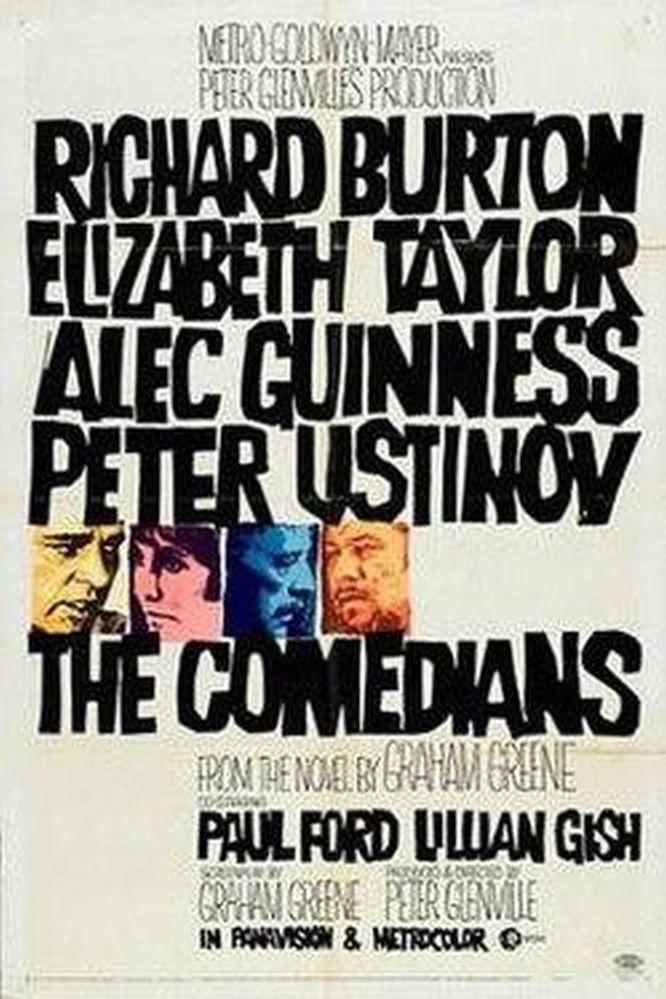
[“The Comedians” is a 1967 film, with screenplay by Greene himself. Faithful as it is, it is not the book. Casting Burton and Taylor helped the box office, but missed the point of failed love, modernist style.]
Metro-Goldwyn-Mayer, U.S. theatrical poster for The Comedians (1967). The poster designer is unconfirmed.

Video still from TikTok, @deguinmargot, as credited on the image.
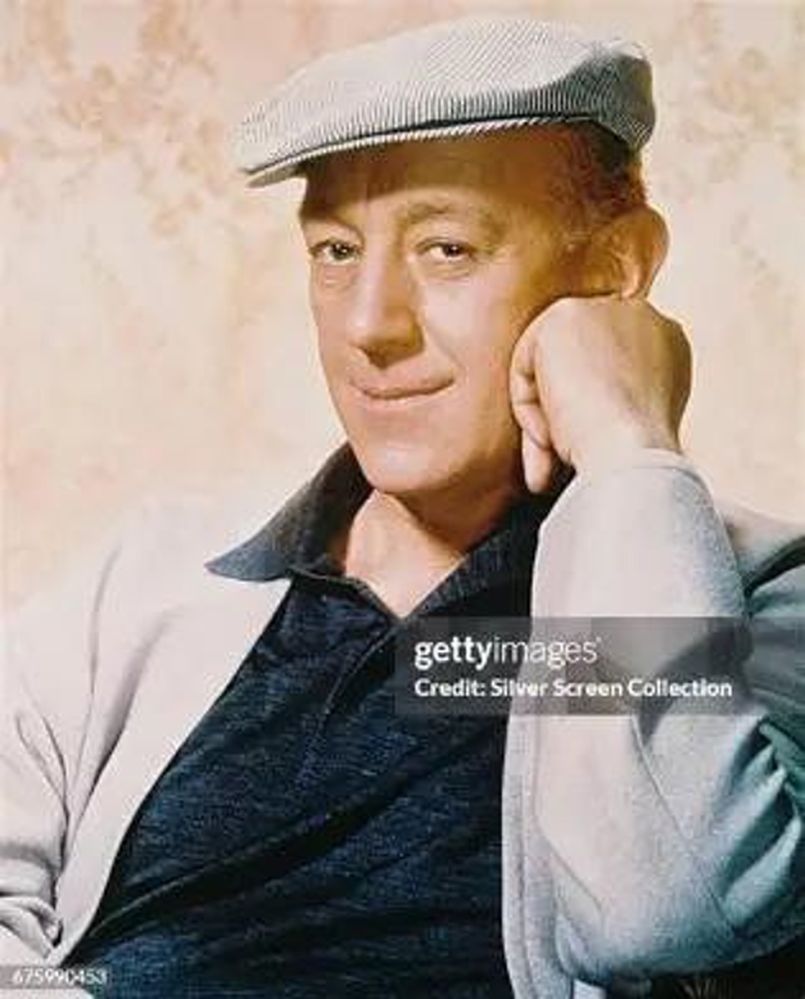
Alec Guinness as “Major Jones” is brilliant. His pose as the swagger-stick British officer, along with the backwash of irresolution, is a marvel.
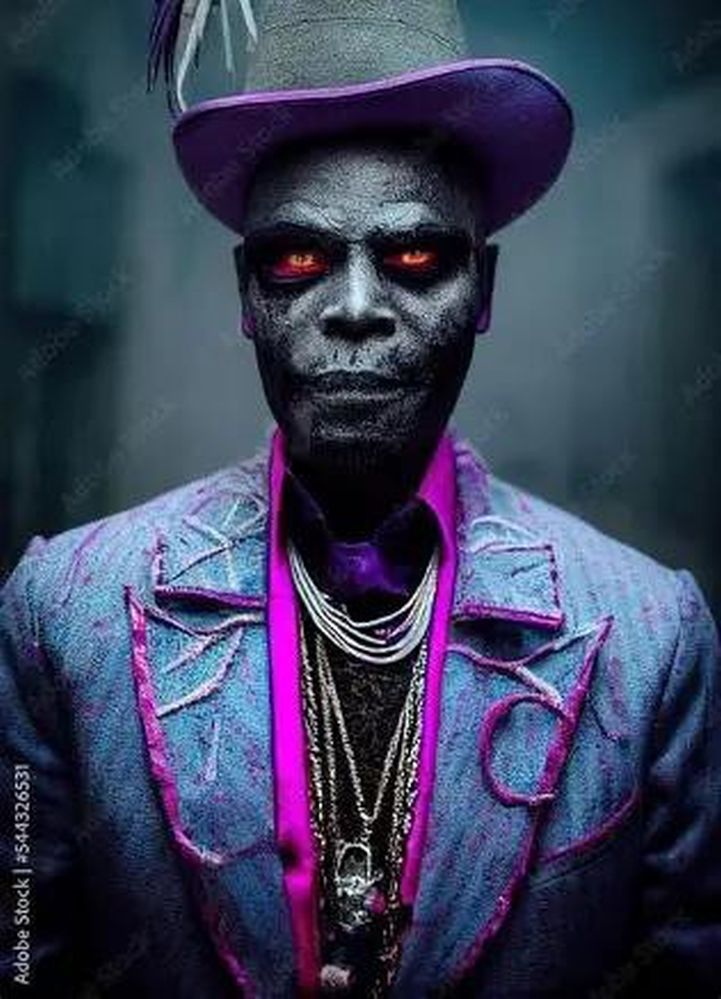
A stylised portrait of Baron Samedi with glowing red eyes, a purple-trimmed top hat and a blue coat over layered necklaces.
Adobe Stock, asset 544326531, as shown on the watermark.

A French tricolour rises above a crowd of demonstrators carrying placards. By October 2026, protests that began over teacher shortages and poor school conditions had widened across France to include the rising cost of living and strained public services

Violinists from the Orchestre du Nouveau Monde play beneath the Monument à la République in Paris on 5 November 2026, as demonstrators gather for a nationwide day of action. The orchestra had also played in the square during the 17 October protest
Ludovic Marin / AFP via Getty Images, as marked on the photograph.