Art from A Christmas Canzonetta
This small collection brings together work by Marion Clarke and her children, Caolan and Taryn, revealing three distinct artistic voices within one family. Marion’s work moves through winter landscape, pastel, watercolour and haiga, often drawn to atmosphere, reflected light, memory and the quiet drama of place. Caolan’s Moonlight on the City introduces a darker urban note, while Taryn’s work ranges from the expressive raven of Study of Black to the tactile warmth of needle-felted wool. Across the collection, landscape, weather, animals and seasonal imagery recur, but each artist approaches them differently. Some pieces are soft and contemplative; others are graphic, textural or more strongly expressive. Together they create a family gallery that feels varied but connected — not by a single style, but by a shared attentiveness to colour, place, mood and the handmade surface.
Last Train of the Year
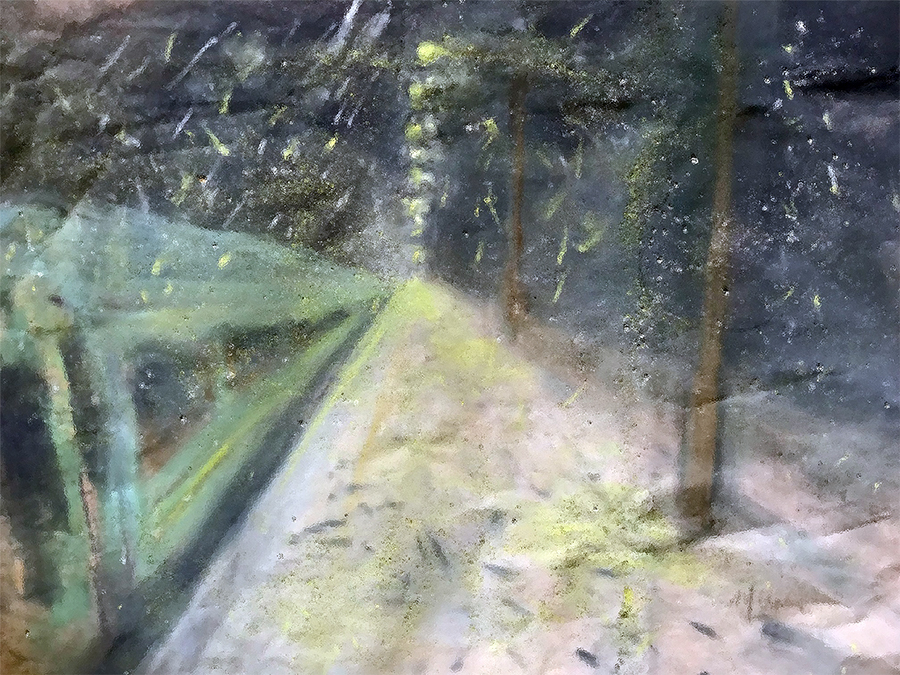
A snow-covered path leads into the dark beneath a line of trees and lamps, while the railing on the left draws the eye steadily towards the distance. Pale greens, blue-greys and soft yellow light dissolve into one another, giving the scene the blurred, hushed quality of a winter evening. The pastel remains visibly worked across the surface — rubbed, layered and broken — so that snow, light and darkness seem to mingle in the air. The title adds a quiet sense of urgency: this is not simply a winter walk, but a moment of departure, with one final journey still to be made before the year closes.
A Winter Wonderland
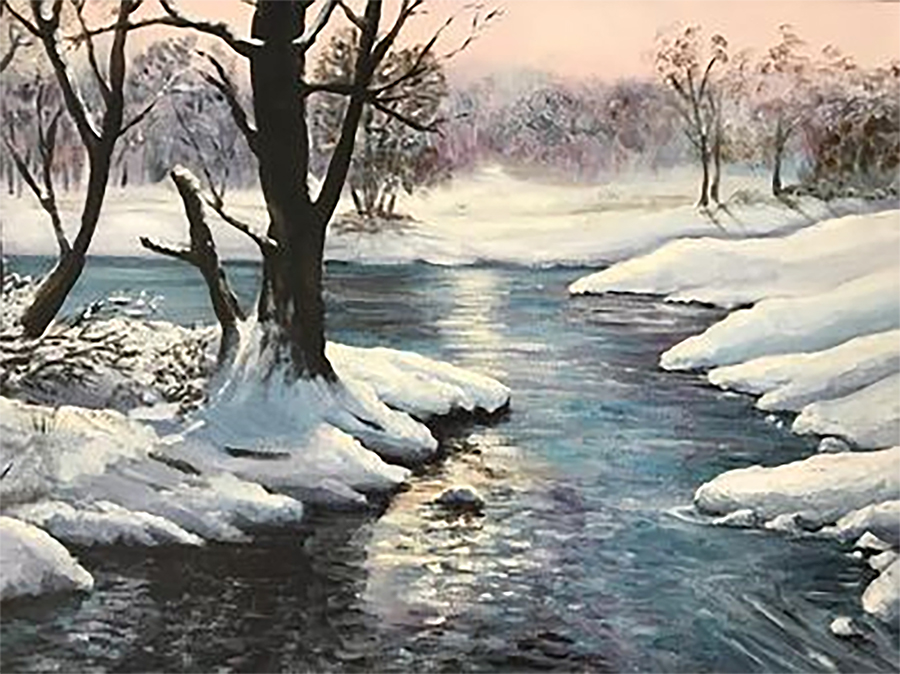
A river winds quietly through deep snow, carrying reflections of the pale winter sky between banks softened by frost. Dark tree trunks anchor the foreground, while the landscape beyond fades gently into mauve, blue and rose-grey. The water provides the only real movement, breaking the stillness with ripples of reflected light. There is a calm, almost dreamlike quality to the scene: winter has transformed the familiar landscape into something hushed, spacious and briefly enchanted.
Moonlight on the City
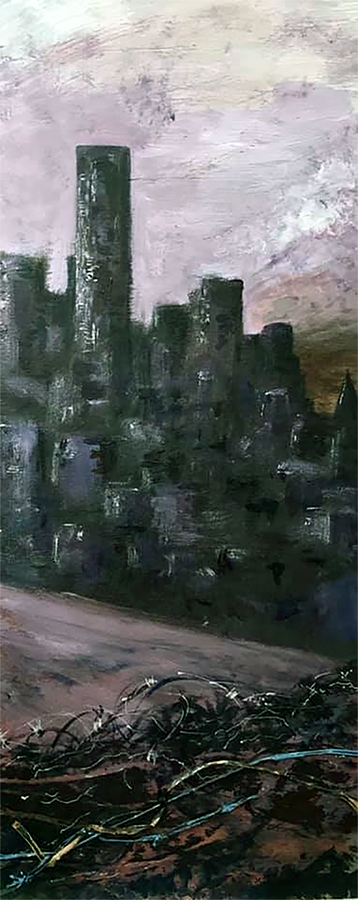
A dark city rises in layers beneath a pale, unsettled sky. Tall buildings emerge from deep greens, greys and near-black tones, their forms softened by the handling of the paint rather than sharply defined. In the foreground, tangled wires and broken lines cut across the lower edge, bringing a rough, physical energy against the distant skyline. The moonlight is indirect rather than theatrical, catching surfaces here and there and allowing much of the city to remain in shadow. The result is atmospheric and slightly uneasy: a city seen at night, half revealed and half withheld.
Coastal Redwoods, Kilbroney Park, Rostrevor
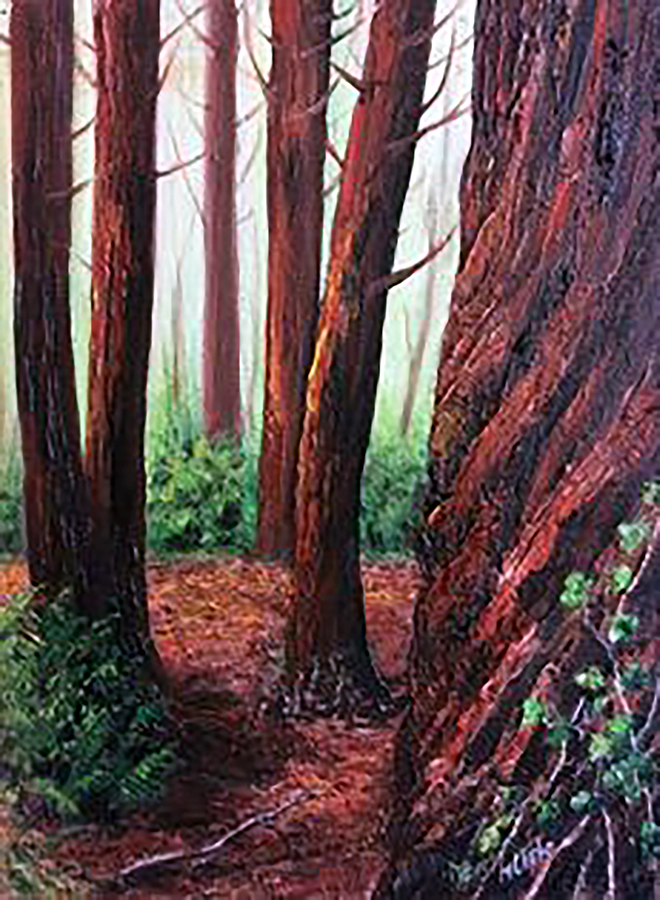
Tall redwood trunks rise through the picture, their warm russet and deep brown tones set against the cool, misty light of the woodland beyond. The trees dominate the foreground, creating a strong vertical rhythm, while glimpses of green undergrowth and pale distance open up between them. The handling of colour gives the bark an almost glowing quality, as though the light is being caught and held by the trees themselves. There is a sense of enclosure here, but also of depth: the eye is drawn steadily through the redwoods and into the quieter forest beyond.
Haiga
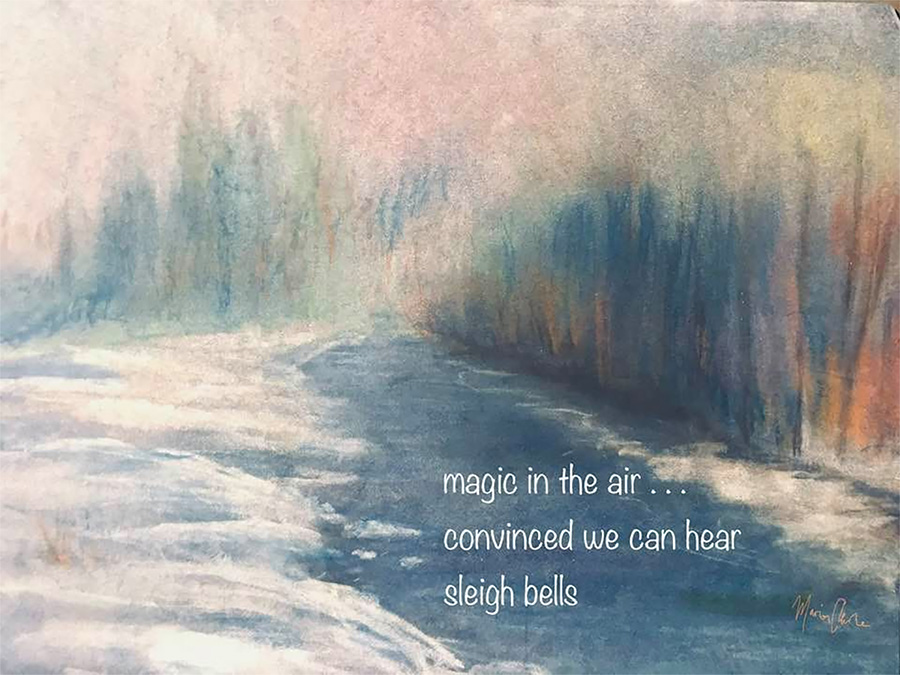
A winter landscape dissolves into soft veils of blue, grey, pink and muted green, with a dark river or path drawing the eye through the centre of the scene. Trees emerge only faintly from the mist, allowing atmosphere to carry as much weight as form. Across the image, the short poem introduces another layer: “magic in the air … / convinced we can hear / sleigh bells.” Image and words meet gently, each leaving room for the other. The result is less a description of winter than an evocation of it — quiet, expectant and touched by imagination.
Study of Black
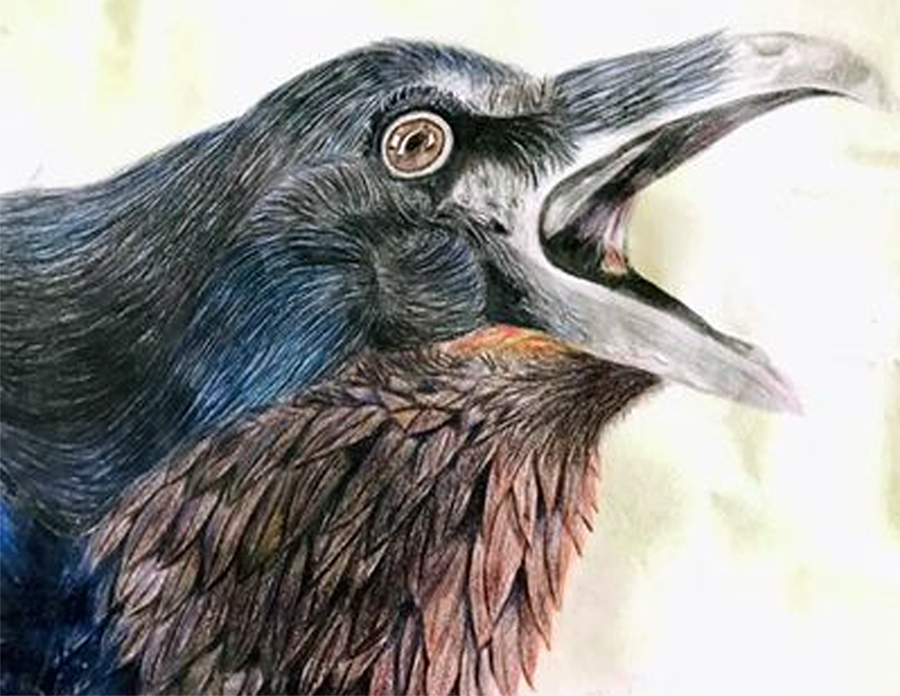
A raven’s head fills the composition, its beak open and eye sharply alert. What at first appears to be a study in black quickly reveals a much richer range of colour: blue, violet, brown, rust and silver are worked through the feathers, giving the plumage depth and movement. Fine directional marks describe the sleek feathers of the head and the rougher texture beneath the throat, while the pale background keeps all attention on the bird itself. The result is both observational and expressive — a close study of darkness that shows how many colours black can contain.
Winter at Castlewellan Forest Park

A great tree rises from a bed of stones, its roots spreading visibly into the foreground like strong fingers gripping the earth. The winter palette is restrained — greys, blue-greens, white and charcoal — but the contrasts give the trunk real weight and structure. Bare branches stretch outward across the upper part of the painting, while the quieter woodland beyond recedes into cool mist. The stones below create a rhythm of light and dark that leads the eye back towards the base of the tree. It feels both still and enduring: a winter landscape built around strength, age and rootedness.
The Winter Visitor
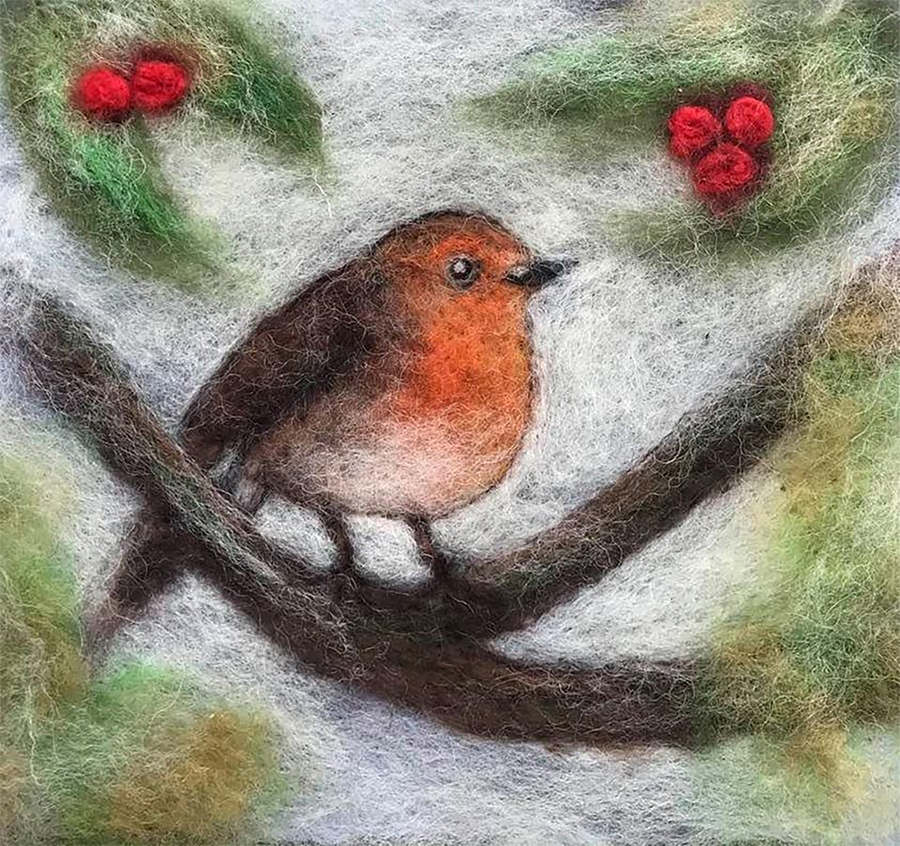
A robin perches among dark winter branches, surrounded by soft green leaves, red berries and a pale felted ground. The wool fibres give the scene a wonderfully tactile quality, with the bird’s rounded form and warm orange breast standing out against the softer winter tones. The loose, feathery texture of the felt suits the subject beautifully, making the whole image feel warm, handmade and quietly festive.
Needle-felted wool painting
Winter Garden

A snow-covered river landscape becomes the setting for a quiet meditation on memory. Dark tree trunks frame the water, while pale blues, greys and soft reflected light carry the eye into the distance. Across the scene, the poem introduces the small sound of a rusty swing chair and then reaches further back, towards the remembered voice of a father calling the family to Sunday Mass. The stillness of the winter garden and the movement of the water hold past and present together, giving the work a sense of absence that is tender rather than mournful.
Baby it's Cold Outside
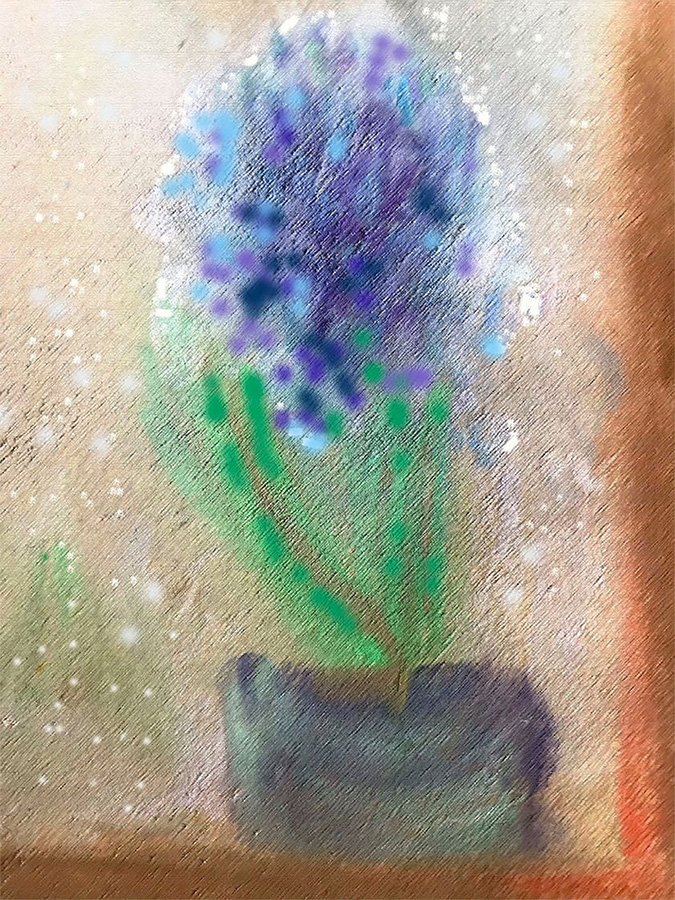
A single flowering plant stands against a softly glowing background, its blue and violet bloom rising above fresh green leaves. Flecks of white drift across the image like snow, creating a gentle contrast between the suggestion of winter outside and the protected life of the plant within. The colours remain light and cheerful, while the hazy surface gives the piece a dreamlike quality. The title adds a note of humour and companionship, turning a small still life into something warm, domestic and quietly seasonal.